Federal Appeals Court Strikes Down Texas Voter ID Law

This decision allows more than 600,000 citizens, who were shut out, the opportunity to cast a ballot in 2016.  #restoreVRA #voterid #Texas

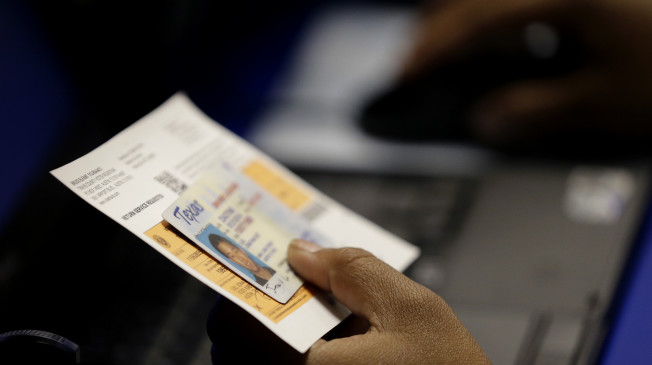
A majority of the full U.S. 5th Circuit Court of Appeals ruled Wednesday that the heavily litigated and controversial Texas voter ID law does have the effect of discriminating against minority voters, and ordered the state to devise a remedy to that problem before the November elections. “We conclude that the district court did not clearly err in determining that SB 14 has a discriminatory effect on minorities’ voting rights in violation of Section 2 of the Voting Rights Act,” the court majority wrote.The unexpected ruling against the Republican-backed voter ID law by the conservative appeals court came as it faced a Supreme-Court-imposed deadline of Wednesday to rule in the case.

Source: Federal Appeals Court Strikes Down Texas Voter ID Law
US curtails federal election observers

Image result for voting

When I served at the DOJ, federal observers were an important part of maintaining order in some jurisdictions.  DOJ believes that the Shelby decision eliminates most election day coverage.  #RestoretheVRA

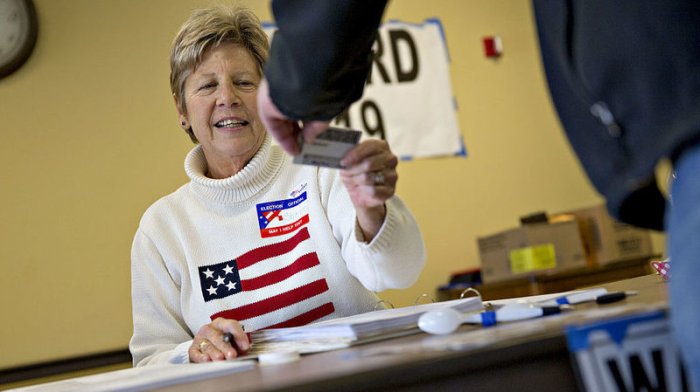
WASHINGTON – Federal election observers can only be sent to five states in this years US presidential election, among the smallest deployments since the Voting

Source: US curtails federal election observers

A Guide To The Big Photo ID, Early Voting And Other Voting Law Cases : NPR

Ahead of November, a number of important voting law cases are still up in the air nationwide. Here’s a breakdown of where some of the big cases stand.

Source: A Guide To The Big Photo ID, Early Voting And Other Voting Law Cases : NPR

Connecting Dr. King’s “March on Ballot Boxes” Speech to Today’s Realities

Here’s an interesting article that connects past and present realities.  GRD

Fifty years ago, the Rev. Martin Luther King Jr. made his first public visit to South Carolina to deliver a speech on a school field in Kingstree about the importance of voting. About 5,000 came out on a rainy day to hear him.

Source: Post and Courier

Felon Disenfranchisement

In Maryland and Virginia, former felons have the ability to vote, with some restrictions. For example, in Virginia, they must complete probation or parole.  Nonetheless. 40,000 persons in Maryland and more than 200.000 persons in Virginia now have access to the ballot box.  These measures, however, may be met with litigation that could affect their ability to vote in the 2016 election. Read the New York Times article here.

NC Voting Rights Challenge

The challenge to North Carolina’s restrictive voting rights law is set to begin next week.  Many believe that the decision could have vast implications for other states.  However, what is most likely to happen after the trial  is an appeal and we could be a year or more away from an impactful decision.  Read more here:  http://www.thecharlottepost.com/news/2015/07/09/local/naacp-nc-square-off-on-voting-rights-with-national-implications/ Continue reading

US Supreme Court Addresses NonPartisan Redistricting

On March 2, 2015, the United States Supreme Court (USSC) heard arguments in Arizona State Legislature v. Arizona Independent Redistricting Commission.   The USSC considered the power of the people versus the power of the legislature. You can find an analysis of today’s argument here.   Arizona state legislators were not happy with the redistricting map that the Independent Commission drafted and implemented in 2012.  The Court’s decision could have widespread implications on redistrictings across the country.  In places like California, where an Independent Commission has successfully drawn and redrawn congressional and state legislative districts in a nonpartisan manner, the Court’s decision could cause a ripple effect that mandates re-redistricting.  If the Arizona legislature gets its way, only elected officials, not nonpartisan citizens, will have the ability to draw the lines to get themselves reelected and continue the widespread polarization that currently exists.

Restoring the Right to Vote

Recently, Virginia and Kentucky took up the issue of restoring the right to vote to persons convicted of nonviolent felonies, with different results.  In VA, the state house voted down a resolution that would allow for automatic restoration.  In KY, state house members will need a super majority after public approval to provide restorative measures to nonviolent felons.  The paradox of outcomes demonstrate that the road to restoration can be extremely difficult for the more than 5 million persons who have lost the right to vote because of former convictions.