Looking Inward to Remain Hopeful

We are in a moment where it is important to fight against feelings of hopelessness. In addition to the external actions that I’ve discussed on my platforms, there are also steps we can take by looking inward. 

Three inward-facing actions that I have been sharing with my community are:

  1. Leaning into your faith, family, and community. 
  2. Shoring up your economic capacity so that you can sustain yourself and help others. 
  3. Staying engaged at the local level. 

Check out this video for more of my discussion on this topic. 

Defending democracy is 24/7/365. 

The Cycles of Voter Suppression (Part 2)

My research identifies three cycles of voter suppression. Each cycle has lasted about 100 years. We are about 60 years into the current cycle, which began with the passage of the Voting Right Act. 

Currently, we are seeing a roll back of rights on every hand. It’s going to take the same types of efforts that were used to overcome prior cycles of voter suppression to end the current cycle. That includes the four pillars that I frequently discuss: educating, legislating, litigating, and participating. 

Those of us who operate in democracy will need to mobilize, organize, and realize our power as a collective people to ensure that we don’t lose ground and can keep moving forward. 

I encourage you to read my full article on this topic, “Ending the Cycles of Voter Suppression” published by the Harvard Civil Rights-Civil Liberties Law Review. It is available here: https://journals.law.harvard.edu/crcl/wp-content/uploads/sites/80/2025/03/10_HLC_60_1_Daniels.pdf. You can also check out my video below. 

Defending democracy is 24/7/365. 

The Cycles of Voter Suppression (Part 1)

I recently published an article in the Harvard Civil Rights-Civil Liberties Law Review titled, “Ending the Cycles of Voter Suppression”. I encourage you to read the full article here.

My article explains three cycles of voter suppression. The first cycle began with the founding of our county. At this time, enslaved Africans were counted as three-fifths of a whole person. From our beginnings as a country, there was a distinction between who would receive the full benefits of citizenship and who would not. This first cycle lasted for about 100 years and ended with the Reconstruction Amendments (the 13th, 14th, and 15th Amendments). 

During the second cycle, the Reconstruction Amendments were ratified, but then states also passed literacy tests, grandfather clauses, poll taxes, and other disenfranchising mechanisms. These mechanisms essentially eliminated the advances of the Reconstruction Amendments. 

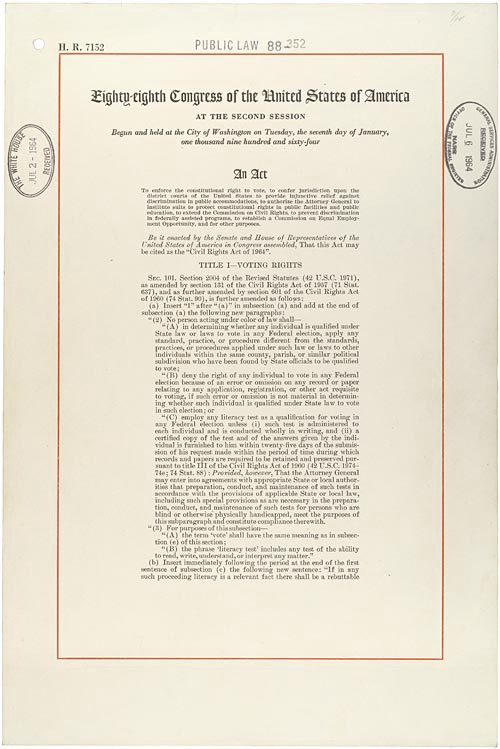
The third cycle began with the passage of the Voting Rights Act, which was passed following Bloody Sunday. The passage of the VRA was and continues to be followed by decades of increasingly aggressive efforts to dismantle it. We are about 60 years into this current cycle. 

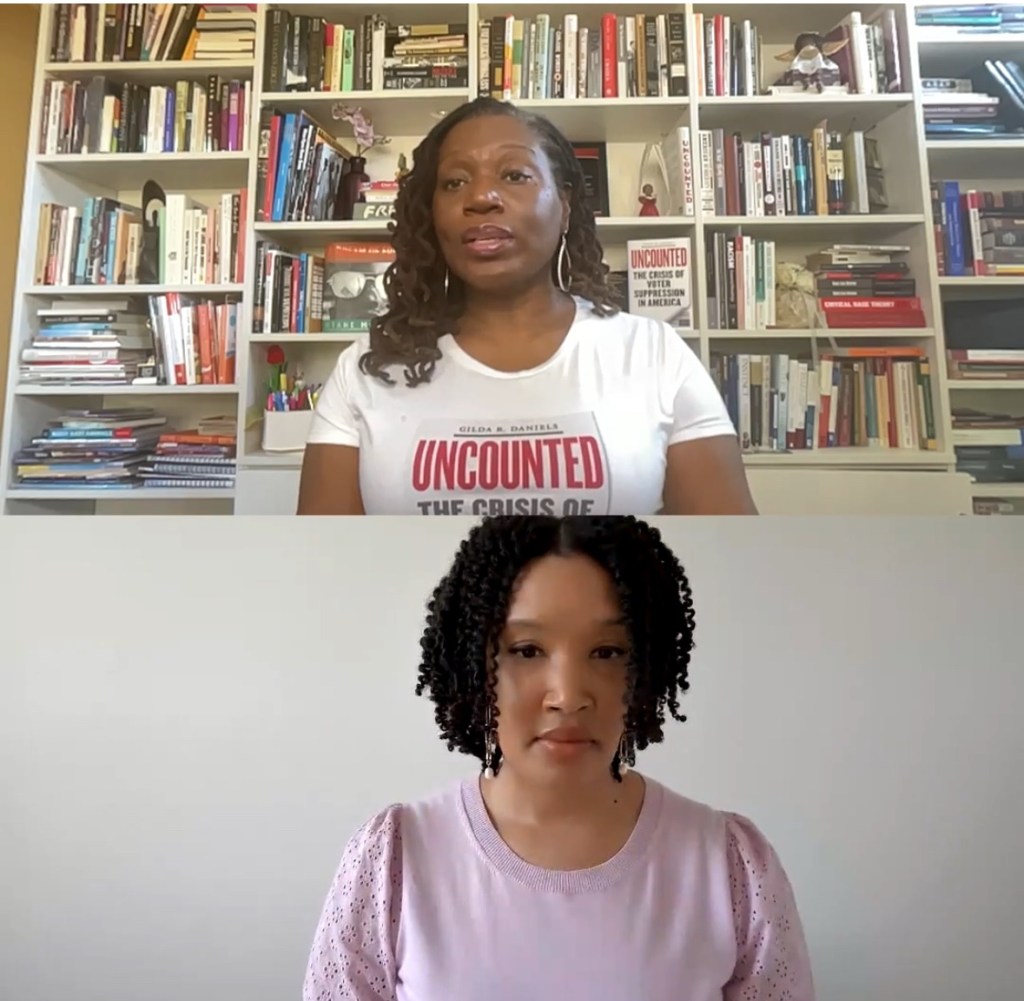
Check out the video below where I discuss the cycles of voter suppression with civil rights attorney Angela Groves. 

Figuring Out Where to Start? Work on the Issue that Bothers You the Most

With so much going on in the news, it can be challenging to figure out where to start or what to focus on. My advice is to start with the issue that bothers you the most. 

Then, whether your issue is immigration, education, or criminal justice reform, there is an organization that’s been working on that particular issue. Do your research to find the organizations in your community that are doing the work and join them. You do not need to start from scratch. 

Over time, hopefully, you will see that you are starting to make a difference and seeing changes in those areas. 

Check out my conversation on this topic with civil rights attorney Angela Groves in the video below. 

Defending democracy is 24/7/365. 

If You’re Ending Your DEI Programming Now, You Were Never Truly Committed

Across the country, educational institutions, corporations, and even law firms have been ending or scaling back their DEI programs. Often, the explanation given is that they want to comply with threats from the White House or SFFA v. Harvard. However, as I’ve said many times before, DEI is not illegal. 

Institutions ending their DEI programs are demonstrating that they were never truly committed to DEI in the first place. Most of these programs were established after the George Floyd uprisings and have not even been in place for 10 years. To see institutions turning from their DEI programs so quickly is disheartening. 

However, now the power is our hands. We can stand up and say that if an institution does not support DEI, then it does not deserve our support. 

Check out my conversation on this topic with civil rights attorney Angela Groves in the video below. 

Defending democracy is 24/7/365. 

Understanding Recent Attacks on Law Firms and Lawyers

Over the past couple months, we have seen attacks on the law firms, attorneys, and judges. It is important to understand that what we’re witnessing is an attack on systems. Across the board, in fact, we are seeing concerted attacks on systems. 

An attempt by the executive branch to control who law firms or lawyers can represent is an attempt to control the entire legal system. If you can get rid of the legal system, you can eliminate an essential avenue for resistance.

With our systems under attack, it is up to us to do our part to fight back. Check out my conversation on this topic with civil rights attorney Angela Groves in the video below. 

Defending democracy is 24/7/365.

Educate, Legislate, Litigate, Participate

With all of the recent attacks on our civil rights, I am often asked what the current moment demands of us. My answer is the same as it was before the election: educate, legislate, litigate, participate. 

  1. Educate: We must educate ourselves about what is happening and how it is impacting our communities. 
  2. Legislate: Contact your elected officials. You are a part of their constituency, regardless of whether or not you voted for them. Find out your representative’s phone number and let them know how you feel about proposed legislation. 
  3. Litigate: Lawsuits are an important tool. We need to help the civil rights organizations that are fighting for our rights in court. 
  4. Participate: Join the local organizations that are working in your interest. We need you to help fight against the dismantling of our rights. 

Check out my conversation on this topic with fellow civil rights attorney Angela Groves in the video below. 

Defending democracy is 24/7/365. 

Ending the Cycles of Voter Suppression

Last month, I published an article in the Harvard Civil Rights-Civil Liberties Law Review titled, “Ending the Cycles of Voter Suppression”. In the article, I provide a brief history of voter suppression and propose measures that can lead us to dismantle it once and for all. I encourage you to read the full article here.

My article explains that our country has repeatedly endured cycles of voter suppression that involve periods of progress followed by the implementation of regressive laws. Our cycles of voter suppression tend to last approximately a hundred years: consider from the founding of our nation to the ratification of the Fifteenth Amendment (94 years), or from the passage of the Fifteenth Amendment to the passage of the Voting Rights Act (VRA) (95 years). The end of each cycle occurred with the passage of impactful legislation that massively added to the electorate. 

In 2025, we are sixty years into another cycle of voter suppression—a cycle that began with passage of the VRA, followed by decades of increasingly aggressive efforts to dismantle it. However, all hope is not lost. Defending and maintaining democracy requires a multi-faceted approach.

As I explain in the article, even though courts continue to serve as an option for relief, they have also demonstrated numerous times in this century that they are not a viable solution due to their anti-democratic and anti-voter decisions.

Instead, I argue that in order to end voter suppression once and for all, Congress must restore the VRA’s principles of notice, transparency, and fairness, while also adapting it to address modern challenges. Enshrining an affirmative right to vote in the Constitution can help lead the way in expanding access to the ballot and ensuring every eligible citizen can vote freely. States must also step in to protect voting rights through state-level voting protections. Finally, we must revitalize civic education and promote civic engagement through grassroots organizations because the power of people has always been key to shaping this nation into a truly democratic country. 

As we work toward ending voter suppression, we must not forget that “democracy delayed is democracy denied.” 

Defending democracy is 24/7/365. 

The Living Constitution: A DEI Document (Part 2)

Last month, I shared Part 1 of my recent presentation about living Constitutionalism. I promised to return with Part 2. 

The U.S. Constitution is a DEI document. We need to look no further than the Reconstruction Amendments – the Thirteenth, Fourteenth, and Fifteenth Amendments – to see this.

The Thirteenth Amendment, passed in 1865, outlawed slavery (except as punishment for crime). The Fourteenth Amendment, passed in 1866 and ratified in 1868, extended the liberties and rights granted by the Bill of Rights to formerly enslaved people. The Fifteenth Amendment, passed in 1869 and ratified in 1870, extended the right to vote to Black men. We can also look to the Nineteenth Amendment, which finally granted women the right to vote in 1920. 

Each of these amendments made our living Constitution more inclusive. They extended constitutional protections to those who had previously been excluded. In the midst of targeted attacks against DEI, our very own Constitution demonstrates why so-called “DEI documents” are essential to achieving the promise of democracy in America. 

It is up to us to fight for their survival. 

Defending democracy is 24/7/365.

The Living Constitution (Part 1)

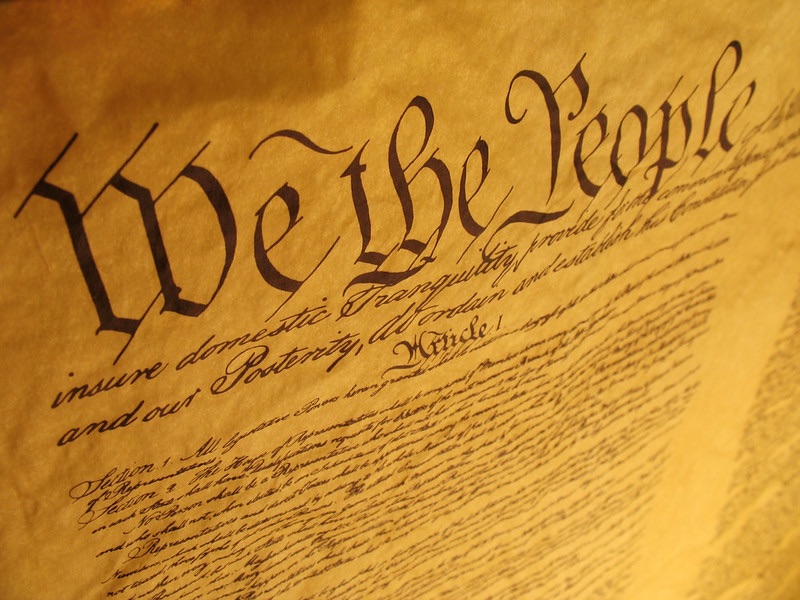
This Photo by Unknown Author is licensed under CC BY-SA-NC

Earlier this week, I gave a presentation on Living Constitutionalism. At the suggestion of one of my law students, I am sharing some of that presentation with you all.  

Living Constitutionalism proposes that interpretations of the U.S. Constitution should evolve with societal changes, adapting to new circumstances without requiring formal amendments. This approach ensures that constitutional rights remain relevant and effective in addressing the challenges of a rapidly changing world. Ideals such as “liberty” and “equal protection” are embedded in the Constitution because they are timeless and inherently adaptable, designed to evolve with society.

Living Constitutionalism is crucial for addressing contemporary challenges such as digital privacy, LGBTQ+ rights, and racial equality. These issues require a nuanced application of age-old principles to new contexts.​

Living Constitutionalism respects established legal precedents while facilitating interpretations that reflect current ethical and moral standards, thereby promoting progressive societal change.

This understanding of our Constitution is as necessary now as ever. 

Be on the lookout for Part 2 of this blog post, explaining why our living Constitution is a DEI document. 

Defending Democracy is 24/7/365.

Lessons from Reconstruction: Free At Last, Not So Fast

This Black History Month, I want to elaborate on a theme that I write about in my book, Uncounted: The Crisis of Voter Suppression in America. That theme is,  “Free at last, not so fast”. 

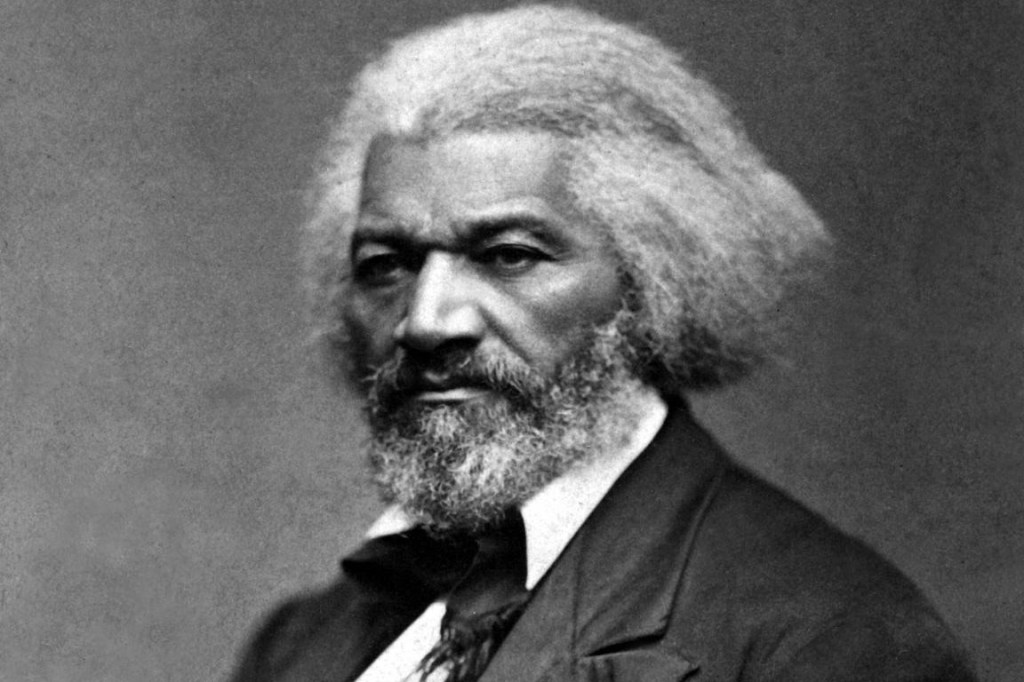
After the passage of the 13th, 14th, and 15th Amendments, Black men were able to register and vote, and indeed they did. Out of slavery, they were able to elect more than 2,000 Black men to office, from U.S. Senators to judges. With a focus on voting and education, they also created school boards. 

The freedom of Reconstruction was short-lived. White landowners in power wanted to stay in power. Just as the law was used to give formerly enslaved people freedom, it was also used to take it away. 

This historical pattern of progress and backlash is not new. “Free at last, not so fast” is a reminder that we have to fight to keep the freedoms that we have. 

Check out the video below for the full discussion with my colleague Angela Groves. 

Defending democracy is 24/7/365. 

What Is DEI?

Image source: https://hsc.unm.edu/medicine/diversity/

The mounting attacks against diversity, equity, and inclusion (“DEI”) have relied on distortions of the meaning of DEI. It’s important that civil rights advocates set the record straight. 

As ReNika Moore of the ACLU explains, programs labeled as DEI “encompass a broad range of lawful initiatives that create fairer workplaces and schools.” DEI initiatives aim to ensure that opportunities aren’t limited based on race, ethnicity, disability, sex, sexual orientation, or gender identity. Examples of DEI initiatives include everything from fair hiring processes to corporate sponsorships to employee-led affinity groups, among others. 

Contrary to the misconstruction that DEI is somehow discriminatory, DEI initiatives were created to counter systemic discrimination and eliminate barriers that never should have existed in the first place. DEI policies allow companies and workplaces to comply with anti-discrimination laws that have been on the books for decades. 

Here are three reliable resources that you can use to build your own understanding of DEI initiatives and the recent attacks against DEI:

  1. ACLU explainer of DEI and Trump’s anti-DEI Executive Orders: https://www.aclu.org/news/racial-justice/trumps-executive-orders-rolling-back-dei-and-accessibility-efforts-explained
  2. The Guardian explainer of DEI, DEI rollbacks, and global implications of rollbacks: https://www.theguardian.com/us-news/2025/jan/24/diversity-backlash-what-is-dei-and-why-is-trump-opposed-to-it 
  3. Pew Research Center 2023 study finding that majority of U.S. workers say DEI at work is a good thing: https://www.pewresearch.org/social-trends/2023/05/17/diversity-equity-and-inclusion-in-the-workplace/ 

Defending democracy is 24/7/365. 

DEI Is Not Illegal

In the past couple weeks, we have seen an escalation of attacks against “DEI”, or diversity, equity, and inclusion. These attacks have been fueled, in part, by misinformation about the meaning and value of DEI. In my upcoming posts, I will be sharing resources with accurate information about what DEI is. 

But let me begin with what DEI is not. DEI is not illegal. Workplaces, schools, governmental bodies, and other institutions can comply with the Constitution while also implementing policies, practices, and offices that explicitly support diversity, equity, and inclusion. In fact, the Constitution itself is a DEI document. The Reconstruction Amendments, in particular, expanded the civil protections of our Constitution to marginalized groups in order to make this country more equitable and more inclusive.

Diversity, equity, and inclusion are not bad words or bad acts. Racism is the bad word and the bad act. Let’s be clear about this. 

Defending democracy is 24/7/365. 

MLK Day + Inauguration Day 2025

Today is both Martin Luther King Jr. Day and Inauguration Day, beginning Trump’s second term as President. This overlap brings to mind a theme in the history of American voting rights that I refer to as, “Free at Last. Not so Fast.” 

If nothing else, this moment calls on us to pay attention and continue to fight. Our freedoms are not guaranteed. They were bought at a price and there is still a price to be paid. That price is hard work. We’re going to have to continue to do the work to keep our freedoms. 

Check out my full conversation with my colleague Angela Groves in the video below. 

Defending democracy is 24/7/365.