Educate, Legislate, Litigate, Participate

With all of the recent attacks on our civil rights, I am often asked what the current moment demands of us. My answer is the same as it was before the election: educate, legislate, litigate, participate. 

  1. Educate: We must educate ourselves about what is happening and how it is impacting our communities. 
  2. Legislate: Contact your elected officials. You are a part of their constituency, regardless of whether or not you voted for them. Find out your representative’s phone number and let them know how you feel about proposed legislation. 
  3. Litigate: Lawsuits are an important tool. We need to help the civil rights organizations that are fighting for our rights in court. 
  4. Participate: Join the local organizations that are working in your interest. We need you to help fight against the dismantling of our rights. 

Check out my conversation on this topic with fellow civil rights attorney Angela Groves in the video below. 

Defending democracy is 24/7/365. 

Ending the Cycles of Voter Suppression

Last month, I published an article in the Harvard Civil Rights-Civil Liberties Law Review titled, “Ending the Cycles of Voter Suppression”. In the article, I provide a brief history of voter suppression and propose measures that can lead us to dismantle it once and for all. I encourage you to read the full article here.

My article explains that our country has repeatedly endured cycles of voter suppression that involve periods of progress followed by the implementation of regressive laws. Our cycles of voter suppression tend to last approximately a hundred years: consider from the founding of our nation to the ratification of the Fifteenth Amendment (94 years), or from the passage of the Fifteenth Amendment to the passage of the Voting Rights Act (VRA) (95 years). The end of each cycle occurred with the passage of impactful legislation that massively added to the electorate. 

In 2025, we are sixty years into another cycle of voter suppression—a cycle that began with passage of the VRA, followed by decades of increasingly aggressive efforts to dismantle it. However, all hope is not lost. Defending and maintaining democracy requires a multi-faceted approach.

As I explain in the article, even though courts continue to serve as an option for relief, they have also demonstrated numerous times in this century that they are not a viable solution due to their anti-democratic and anti-voter decisions.

Instead, I argue that in order to end voter suppression once and for all, Congress must restore the VRA’s principles of notice, transparency, and fairness, while also adapting it to address modern challenges. Enshrining an affirmative right to vote in the Constitution can help lead the way in expanding access to the ballot and ensuring every eligible citizen can vote freely. States must also step in to protect voting rights through state-level voting protections. Finally, we must revitalize civic education and promote civic engagement through grassroots organizations because the power of people has always been key to shaping this nation into a truly democratic country. 

As we work toward ending voter suppression, we must not forget that “democracy delayed is democracy denied.” 

Defending democracy is 24/7/365. 

The Living Constitution: A DEI Document (Part 2)

Last month, I shared Part 1 of my recent presentation about living Constitutionalism. I promised to return with Part 2. 

The U.S. Constitution is a DEI document. We need to look no further than the Reconstruction Amendments – the Thirteenth, Fourteenth, and Fifteenth Amendments – to see this.

The Thirteenth Amendment, passed in 1865, outlawed slavery (except as punishment for crime). The Fourteenth Amendment, passed in 1866 and ratified in 1868, extended the liberties and rights granted by the Bill of Rights to formerly enslaved people. The Fifteenth Amendment, passed in 1869 and ratified in 1870, extended the right to vote to Black men. We can also look to the Nineteenth Amendment, which finally granted women the right to vote in 1920. 

Each of these amendments made our living Constitution more inclusive. They extended constitutional protections to those who had previously been excluded. In the midst of targeted attacks against DEI, our very own Constitution demonstrates why so-called “DEI documents” are essential to achieving the promise of democracy in America. 

It is up to us to fight for their survival. 

Defending democracy is 24/7/365.

The Living Constitution (Part 1)

This Photo by Unknown Author is licensed under CC BY-SA-NC

Earlier this week, I gave a presentation on Living Constitutionalism. At the suggestion of one of my law students, I am sharing some of that presentation with you all.  

Living Constitutionalism proposes that interpretations of the U.S. Constitution should evolve with societal changes, adapting to new circumstances without requiring formal amendments. This approach ensures that constitutional rights remain relevant and effective in addressing the challenges of a rapidly changing world. Ideals such as “liberty” and “equal protection” are embedded in the Constitution because they are timeless and inherently adaptable, designed to evolve with society.

Living Constitutionalism is crucial for addressing contemporary challenges such as digital privacy, LGBTQ+ rights, and racial equality. These issues require a nuanced application of age-old principles to new contexts.​

Living Constitutionalism respects established legal precedents while facilitating interpretations that reflect current ethical and moral standards, thereby promoting progressive societal change.

This understanding of our Constitution is as necessary now as ever. 

Be on the lookout for Part 2 of this blog post, explaining why our living Constitution is a DEI document. 

Defending Democracy is 24/7/365.

Lessons from Reconstruction: Free At Last, Not So Fast

This Black History Month, I want to elaborate on a theme that I write about in my book, Uncounted: The Crisis of Voter Suppression in America. That theme is,  “Free at last, not so fast”. 

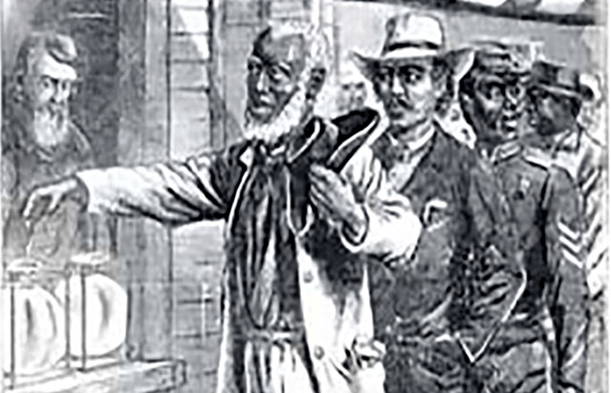
After the passage of the 13th, 14th, and 15th Amendments, Black men were able to register and vote, and indeed they did. Out of slavery, they were able to elect more than 2,000 Black men to office, from U.S. Senators to judges. With a focus on voting and education, they also created school boards. 

The freedom of Reconstruction was short-lived. White landowners in power wanted to stay in power. Just as the law was used to give formerly enslaved people freedom, it was also used to take it away. 

This historical pattern of progress and backlash is not new. “Free at last, not so fast” is a reminder that we have to fight to keep the freedoms that we have. 

Check out the video below for the full discussion with my colleague Angela Groves. 

Defending democracy is 24/7/365. 

What Is DEI?

Image source: https://hsc.unm.edu/medicine/diversity/

The mounting attacks against diversity, equity, and inclusion (“DEI”) have relied on distortions of the meaning of DEI. It’s important that civil rights advocates set the record straight. 

As ReNika Moore of the ACLU explains, programs labeled as DEI “encompass a broad range of lawful initiatives that create fairer workplaces and schools.” DEI initiatives aim to ensure that opportunities aren’t limited based on race, ethnicity, disability, sex, sexual orientation, or gender identity. Examples of DEI initiatives include everything from fair hiring processes to corporate sponsorships to employee-led affinity groups, among others. 

Contrary to the misconstruction that DEI is somehow discriminatory, DEI initiatives were created to counter systemic discrimination and eliminate barriers that never should have existed in the first place. DEI policies allow companies and workplaces to comply with anti-discrimination laws that have been on the books for decades. 

Here are three reliable resources that you can use to build your own understanding of DEI initiatives and the recent attacks against DEI:

  1. ACLU explainer of DEI and Trump’s anti-DEI Executive Orders: https://www.aclu.org/news/racial-justice/trumps-executive-orders-rolling-back-dei-and-accessibility-efforts-explained
  2. The Guardian explainer of DEI, DEI rollbacks, and global implications of rollbacks: https://www.theguardian.com/us-news/2025/jan/24/diversity-backlash-what-is-dei-and-why-is-trump-opposed-to-it 
  3. Pew Research Center 2023 study finding that majority of U.S. workers say DEI at work is a good thing: https://www.pewresearch.org/social-trends/2023/05/17/diversity-equity-and-inclusion-in-the-workplace/ 

Defending democracy is 24/7/365. 

DEI Is Not Illegal

In the past couple weeks, we have seen an escalation of attacks against “DEI”, or diversity, equity, and inclusion. These attacks have been fueled, in part, by misinformation about the meaning and value of DEI. In my upcoming posts, I will be sharing resources with accurate information about what DEI is. 

But let me begin with what DEI is not. DEI is not illegal. Workplaces, schools, governmental bodies, and other institutions can comply with the Constitution while also implementing policies, practices, and offices that explicitly support diversity, equity, and inclusion. In fact, the Constitution itself is a DEI document. The Reconstruction Amendments, in particular, expanded the civil protections of our Constitution to marginalized groups in order to make this country more equitable and more inclusive.

Diversity, equity, and inclusion are not bad words or bad acts. Racism is the bad word and the bad act. Let’s be clear about this. 

Defending democracy is 24/7/365. 

MLK Day + Inauguration Day 2025

Today is both Martin Luther King Jr. Day and Inauguration Day, beginning Trump’s second term as President. This overlap brings to mind a theme in the history of American voting rights that I refer to as, “Free at Last. Not so Fast.” 

If nothing else, this moment calls on us to pay attention and continue to fight. Our freedoms are not guaranteed. They were bought at a price and there is still a price to be paid. That price is hard work. We’re going to have to continue to do the work to keep our freedoms. 

Check out my full conversation with my colleague Angela Groves in the video below. 

Defending democracy is 24/7/365. 

What Happened on Election Day?

What happened on Election Day last November? Democracy worked, in that people were able to voice their opinions through the vote. 

By and large, those who wanted to cast a ballot had the opportunity to do so. Many lawsuits were filed in advance of the election to create an environment in which people could participate freely, fairly, and without discrimination. While we may not like the outcome, the sobering reality is that those who wanted to make their voices heard at the ballot box were able to do so.

Low voter turnout (about 64% for the presidential election), however, is something that must be addressed. Many of those who did not vote were taken advantage of by misinformation and disinformation. A lot of content on social media was targeted towards influencing people not to vote. 

As we press forward, we have to keep showing people that their vote matters and that they should have a say in which candidates are elected.  

Check out my full conversation on this topic in the video below.

Defending democracy is 24/7/365. 

New Year’s Resolutions for Voters

Happy New Year! Many of us make New Year’s Resolutions for our personal and professional lives. What if we were to make a set of New Year’s resolutions focused on our roles as voters? 

Take a look at the video below as I discuss four New Year’s Resolutions for Voters with my colleague Angela Groves: “Educate. Legislate. Litigate. Participate.” 

Defending democracy is 24/7/365. 

View this blog post and join my email list at: https://civilrightstoday.org

Amplifying Our Wins

As we begin winding down for the holiday season, I have been reflecting on the voting rights victories of the November election. There is much to say of the losses, but we cannot lose sight of our wins. 

For example, for the first time in our nation’s nearly 250-year history, two Black women will serve in the Senate at the same time. These women are Angela Alsobrooks of Maryland and Lisa Blunt Rochester of Delaware. 

After tireless organizing and litigation, Alabama voters elected Shomari Figures to represent the congressional district that Alabama was ordered by the Supreme Court to redraw. Figures will be the first Black person to represent this district since 1832. And for the first time in history, Alabama will have two Black members serving in Congress at the same time.

In Louisiana, redrawn congressional maps made way for increased representation for Black voters. Louisiana voters elected Cleo Fields to represent this redrawn district. 

These victories were hard fought. As we press forward and contend with the new political realities resulting from the November election, let’s not overlook the places where progress was made. 

Defending Democracy is 24/7/365. Join my email list at https://civilrightstoday.org/about/.

It’s Time to Activate Our Checks and Balances

This week, I’ve been posting on social media about the checks and balances built into our democracy. 

We have every reason to believe that the coming years will test the limits of our system’s checks and balances. But, as constitutional law professors have observed, our existing guardrails can be powerful tools for defending democracy. These checks and balances are designed to protect us from autocratic control. 

One check that we have seen emerge in the past week is the power of state governments. The California Attorney General, for example, is already preparing to “use every tool” to defend constitutional rights. Litigation in coordination with other states is a tool that California is preparing.

Another check comes from civil society. Nonprofit organizations, for example, showed up in significant ways during the last Trump administration and are gearing up to do so again. 

Our work in the coming months and years must include exploring and activating existing checks and balances in defense of our communities. 

Defending democracy is 24/7/365. 

The Work Starts Now

The General Election may be over, but our work starts now. We can create the democracy that we want to live in. We do that by showing up in our communities and fighting back against injustice at every turn. No matter the challenges ahead, we must demand that democracy remains. 

As I often say, defending democracy is 24/7/365. This has never been more true.

Now, let’s get to work! 

Do You Know Your Voting Plan? 

The General Election is just five days away! If you haven’t done so already, now is the time to make your voting plan. 

Every voter should have a plan before casting their ballot. Here are five steps you can take to make your voting plan: 

  1. Confirm your voter registration status. Some states, such as Virginia and the District of Columbia, allow you to register in person on Election Day or during early voting. You can check your registration status using this tool
  1. Research your early voting options. My prior blog post on early voting includes helpful early voting resources. 
  1. Learn your options for voting in person on Election Day. Know in advance where you can vote in person and what to bring with you. This site can help.
  1. If you are voting in person, decide how and when you will get to the polls. Many organizations offer free or discounted rides to vote. For example, Lyft is offering half off rides to the polls on Election Day.  
  1. Get to know more about the candidates and issues on your ballot. It is critical to vote for all offices and issues on your ballot. My prior blog post on down-ballot voting has tips on how to prepare.

If you need additional help creating your voting plan, you can call 1-866-OUR-VOTE for nonpartisan support.

Defending Democracy is 24/7/365