What Happened on Election Day?

What happened on Election Day last November? Democracy worked, in that people were able to voice their opinions through the vote. 

By and large, those who wanted to cast a ballot had the opportunity to do so. Many lawsuits were filed in advance of the election to create an environment in which people could participate freely, fairly, and without discrimination. While we may not like the outcome, the sobering reality is that those who wanted to make their voices heard at the ballot box were able to do so.

Low voter turnout (about 64% for the presidential election), however, is something that must be addressed. Many of those who did not vote were taken advantage of by misinformation and disinformation. A lot of content on social media was targeted towards influencing people not to vote. 

As we press forward, we have to keep showing people that their vote matters and that they should have a say in which candidates are elected.  

Check out my full conversation on this topic in the video below.

Defending democracy is 24/7/365. 
New Year’s Resolutions for Voters

Happy New Year! Many of us make New Year’s Resolutions for our personal and professional lives. What if we were to make a set of New Year’s resolutions focused on our roles as voters? 

Take a look at the video below as I discuss four New Year’s Resolutions for Voters with my colleague Angela Groves: “Educate. Legislate. Litigate. Participate.” 

Defending democracy is 24/7/365. 
View this blog post and join my email list at: https://civilrightstoday.org

Amplifying Our Wins

As we begin winding down for the holiday season, I have been reflecting on the voting rights victories of the November election. There is much to say of the losses, but we cannot lose sight of our wins. 

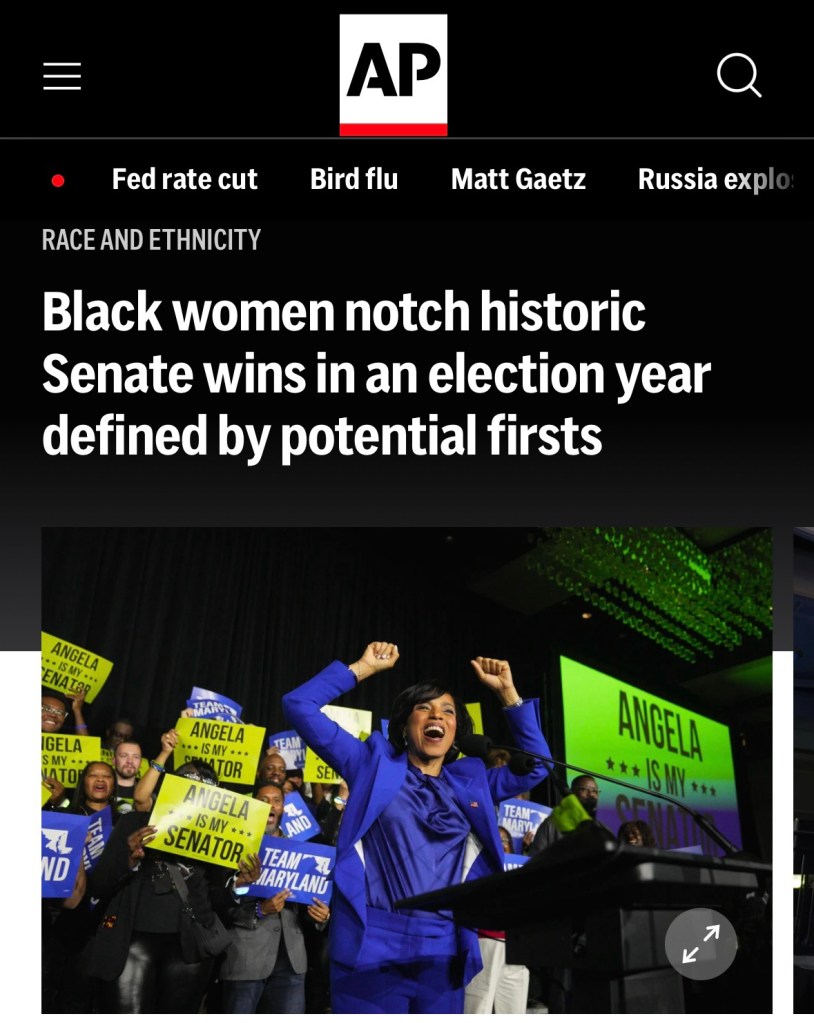
For example, for the first time in our nation’s nearly 250-year history, two Black women will serve in the Senate at the same time. These women are Angela Alsobrooks of Maryland and Lisa Blunt Rochester of Delaware. 

After tireless organizing and litigation, Alabama voters elected Shomari Figures to represent the congressional district that Alabama was ordered by the Supreme Court to redraw. Figures will be the first Black person to represent this district since 1832. And for the first time in history, Alabama will have two Black members serving in Congress at the same time.

In Louisiana, redrawn congressional maps made way for increased representation for Black voters. Louisiana voters elected Cleo Fields to represent this redrawn district. 

These victories were hard fought. As we press forward and contend with the new political realities resulting from the November election, let’s not overlook the places where progress was made. 

Defending Democracy is 24/7/365. Join my email list at https://civilrightstoday.org/about/.

It’s Time to Activate Our Checks and Balances

This week, I’ve been posting on social media about the checks and balances built into our democracy. 

We have every reason to believe that the coming years will test the limits of our system’s checks and balances. But, as constitutional law professors have observed, our existing guardrails can be powerful tools for defending democracy. These checks and balances are designed to protect us from autocratic control. 

One check that we have seen emerge in the past week is the power of state governments. The California Attorney General, for example, is already preparing to “use every tool” to defend constitutional rights. Litigation in coordination with other states is a tool that California is preparing.

Another check comes from civil society. Nonprofit organizations, for example, showed up in significant ways during the last Trump administration and are gearing up to do so again. 

Our work in the coming months and years must include exploring and activating existing checks and balances in defense of our communities. 

Defending democracy is 24/7/365. 
The Work Starts Now

The General Election may be over, but our work starts now. We can create the democracy that we want to live in. We do that by showing up in our communities and fighting back against injustice at every turn. No matter the challenges ahead, we must demand that democracy remains. 

As I often say, defending democracy is 24/7/365. This has never been more true.

Now, let’s get to work! 

Do You Know Your Voting Plan? 

The General Election is just five days away! If you haven’t done so already, now is the time to make your voting plan. 

Every voter should have a plan before casting their ballot. Here are five steps you can take to make your voting plan: 

  1. Confirm your voter registration status. Some states, such as Virginia and the District of Columbia, allow you to register in person on Election Day or during early voting. You can check your registration status using this tool
  1. Research your early voting options. My prior blog post on early voting includes helpful early voting resources. 
  1. Learn your options for voting in person on Election Day. Know in advance where you can vote in person and what to bring with you. This site can help.
  1. If you are voting in person, decide how and when you will get to the polls. Many organizations offer free or discounted rides to vote. For example, Lyft is offering half off rides to the polls on Election Day.  
  1. Get to know more about the candidates and issues on your ballot. It is critical to vote for all offices and issues on your ballot. My prior blog post on down-ballot voting has tips on how to prepare.

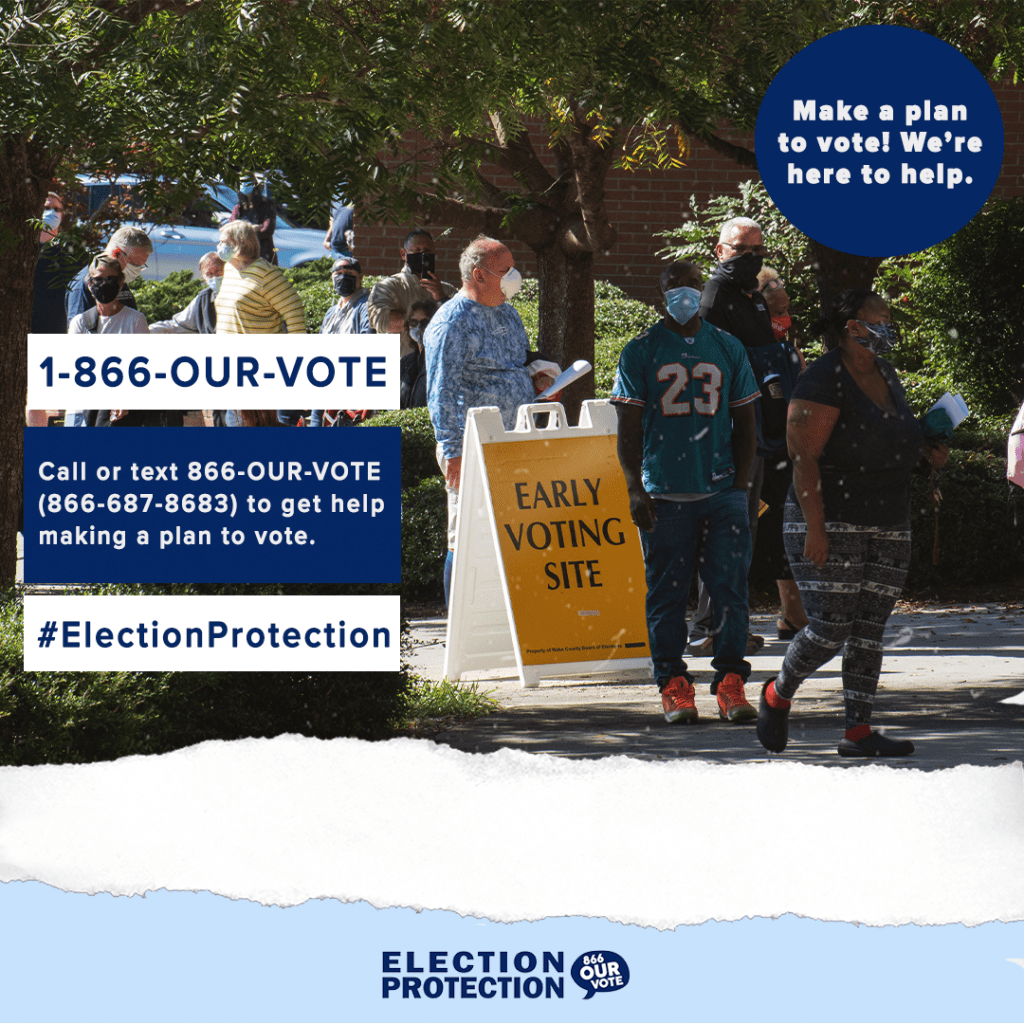
If you need additional help creating your voting plan, you can call 1-866-OUR-VOTE for nonpartisan support.

Defending Democracy is 24/7/365

Know Before You Go: Voter ID Requirements

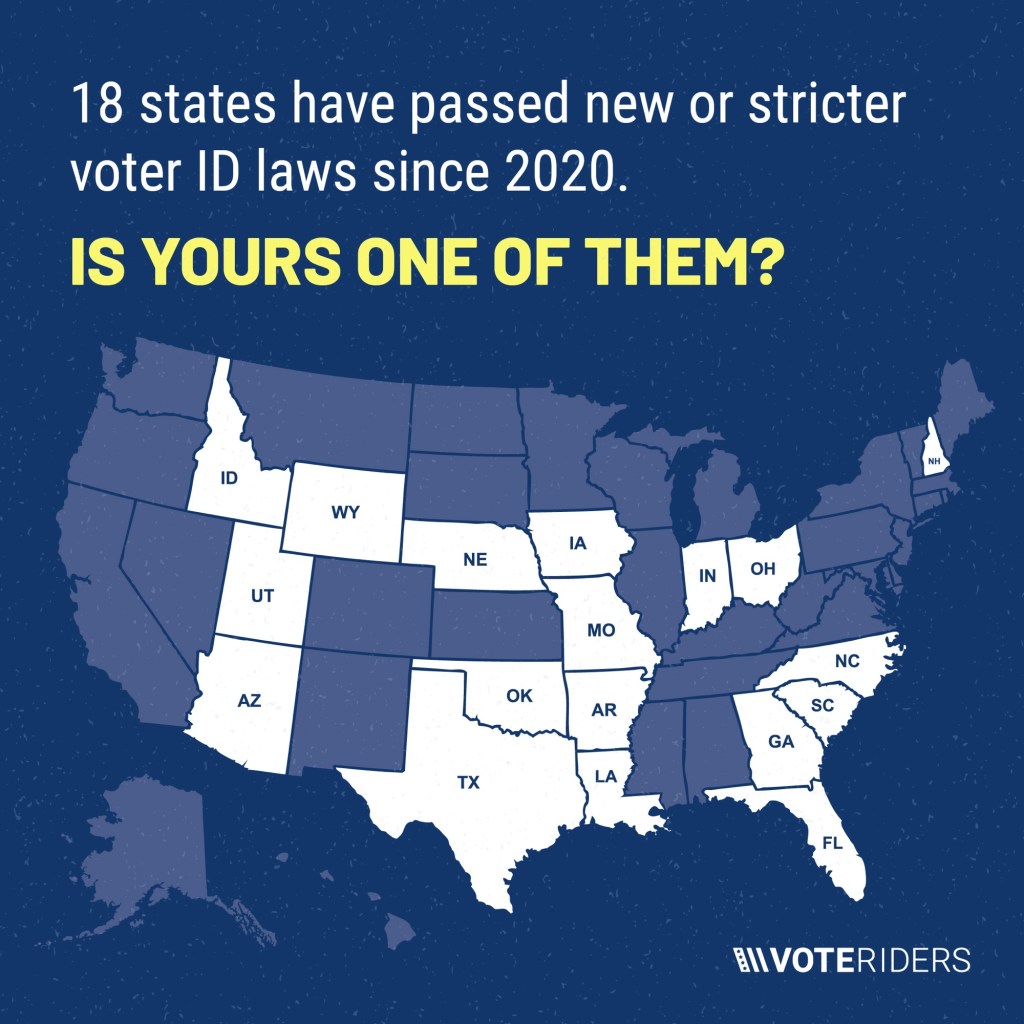
It is important to prepare to vote before you cast your ballot. Part of this preparation should include educating yourself and your loved ones about the voter ID requirements, if any, in your state. 

Voter ID requirements vary by state. Some jurisdictions, like the District of Columbia, do not require most voters to present identification in order to vote. However, others, such as Alabama, require a photo ID for all voters. It is always best to confirm the voter ID requirements in your state by checking your local board of elections website. You can also use the tools provided by Vote.Org (https://www.vote.org/voter-id-laws/) or Ballotpedia (https://ballotpedia.org/Voter_identification_laws_by_state). 

In addition to educating yourself, join organizing efforts to expand access to voting! Strict voter ID laws are a modern voter suppression tactic, presenting barriers to voting that disproportionately harm Black and Brown voters. Let’s organize and litigate against these tactics, while also preparing voters to meet the existing requirements in their states for the upcoming election. 

Defending democracy is 365/24/7. 

Let the People Vote: Fighting Back against Voter Suppression 

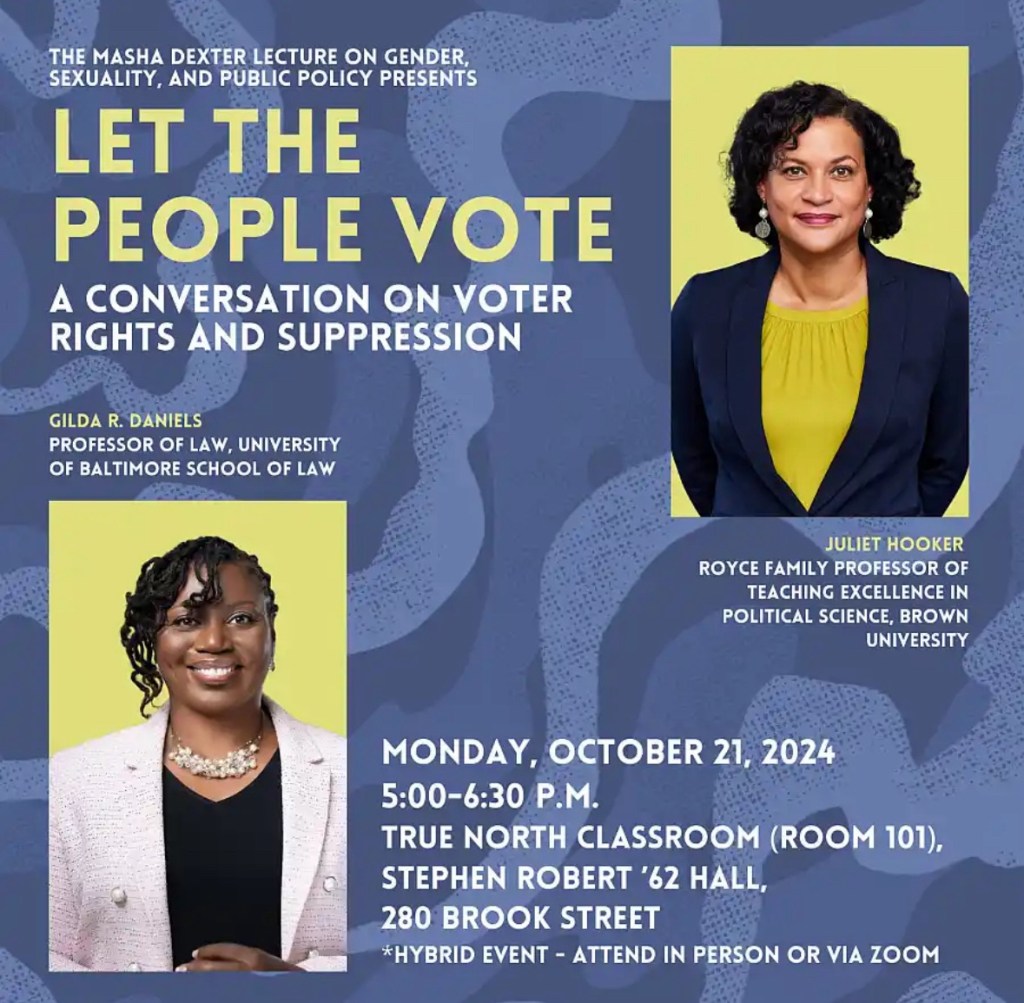
On October 21st, I will have the pleasure of speaking about voting rights and voter suppression at the annual Masha Dexter Lecture on Gender, Sexuality, and Public Policy at Brown University. I will be in conversation with Professor Juliet Hooker. You can register to attend this event virtually using this link

As I discuss in my book Uncounted, there is a long history of voter suppression targeting Black and Brown voters in this country. Voter suppression works in cycles, constantly adapting and finding new ways to hinder access for a growing population of people of color.

Voter suppression has only continued in recent years, enabled by the Supreme Court decision in Shelby County v. Holder that dismantled Section 5 of the Voting Rights Act. Recent examples of voter suppression include stricter voter ID requirements, meritless claims of rigged elections, and baseless accusations of voter fraud, among others.

We must stand up against voter suppression! Exercise your right to vote and organize against restrictive laws and practices that erode the very basis of American democracy – the right to vote! 

Know Before You Go: Absentee/Mail-In Voting

With less than one month to go before the November General Election, many voters are already participating in absentee voting. Absentee voting is also referred to as “mail-in voting” or “vote by mail”. This practice involves receiving your ballot by mail, and then returning it by mail or in person. 

All states offer some form of absentee voting. It is an important option that can make voting more accessible.

The requirements for absentee voting vary by state. Some states, such as Alabama, require voters to provide a “valid excuse” for not voting in person on Election Day in order to receive an absentee ballot. Other states, such as Virginia, allow anyone to request an absentee ballot, regardless of whether they are able to vote in person on Election Day. Still others, such as the District of Columbia, automatically mail an absentee ballot to every registered vote. We must continue to advocate for expansive absentee voting options in all states.  

To find out the rules and deadlines for absentee voting your state, you can visit https://www.vote.org/absentee-voting-rules/ or your state’s Board of Elections website. 

Early Voting Is Starting Soon!

Early voting for the November general election is beginning as early as next week in some states. The majority of Americans are eligible to vote early without an excuse. Early voting can fit into any schedule and is a great option to ensure that all citizens can participate in our democracy. 

The availability and dates for early voting vary by state. Below are the start dates for early voting in the states where it is provided. You can use the tool at https://www.vote411.org/search-by-topic to find more information about early voting in your state (just select your state and the topic “early voting”). As always, it’s best to double-check with your state for any recent changes to early voting. 

AlabamaNone
Alaska10/21/2024
Arizona10/9/2024
Arkansas10/21/2024
California10/7/2024
Colorado10/21/2024
Connecticut10/21/2024
District of Columbia10/28/2024
Delaware10/25/2024
Florida10/26/2024
Georgia10/15/2024
Hawaii10/22/2024
Idaho10/21/2024
Illinois9/26/2024
Indiana10/8/2024
Iowa10/16/2024
Kansas10/16/2024
Kentucky10/31/2024
Louisiana 10/18/2024
MaineVaries[1]
Maryland10/24/2024
Massachusetts10/19/2024
Michigan10/26/2024
Minnesota9/20/2024
MississippiNone
Missouri10/22/2024
Montana10/7/2024
Nebraska10/7/2024
Nevada10/19/2024
New HampshireNone
New Jersey10/26/2024
New Mexico10/8/2024
New York10/26/2024
North Carolina10/17/2024
North DakotaVaries
Ohio10/8/2024
Oklahoma10/30/2024
OregonVaries
PennsylvaniaVaries
Rhode Island10/16/2024
South Carolina10/21/2024
South Dakota9/20/2024
Tennessee10/16/2024
Texas10/21/2024
Utah10/22/2024
Vermont9/21/2024
Virginia9/20/2024
Washington10/18/2024
West Virginia10/23/2024
Wisconsin10/22/2024
Wyoming10/8/2024

Source: https://ballotpedia.org/Early_voting_dates,_2024

The Importance of Down-Ballot Voting

We all know that this is a presidential election year. However, it’s important to vote for every office and issue on the ballot, not just the president. In voting rights spaces, we refer to the practice of completing your entire ballot as “down-ballot” voting. 

Down-ballot voting especially impacts local elections. Local elections, in turn, impact our daily lives. For example, local governments play a significant role in everything from roads to schools to transportation to policing. Why give up the power to influence these important issues? 

In order to show up prepared to vote for every office and issue on your ballot, do your research before you arrive at the polls! Here are a few resources you can use to educate yourself on local candidates and issues:

  1. Review a sample ballot at Ballotpedia: https://ballotpedia.org/Main_Page
  2. Check your local news for information about candidates 
  3. Use the ballot guide mailed to you by local and state voting officials

Let’s use our voting power to its fullest extent! Defending democracy is 365/24/7. 

Stay Vigilant against Disinformation Campaigns

We need to talk about the disinformation campaigns attempting to influence the November election and their targeted interest in Black and Brown voters.   

Earlier this month, the DOJ charged two Russian state media employees in an attempt to push back against Russia’s efforts to influence our presidential election. Russian disinformation tactics have included fake websites designed to look like authentic U.S. news outlets and AI-generated social media profiles, among other methods. 

A disturbing amount of disinformation is aimed specifically at Black and Brown voters. A recent report by Onyx Impact found that more than 40 million Americans in Black online spaces may have been given disinformation about the upcoming election. This is not a new tactic. Disinformation was used during Reconstruction in efforts to prevent Black voters from participating in elections.  

Disinformation campaigns aim to undermine our democracy and diminish our political power. Here are a few steps you can take to prevent this:

We must stay vigilant! Defending democracy is 365/24/7. 

The Fight to Vote for the Right to Vote: Get Registered!

Voting rights are on the ballot again this election. Throughout our nation’s history, it has always been a fight to afford all citizens the right to participate in our democracy. It is critical that our communities are registered to vote in this important election so that we can continue to fight for our right to vote. 

You can register to vote or update your registration here: www.vote.gov

You can find and contact your local election office for help with registering here: www.usa.gov/state-election-office

You can find the voter registration deadlines for your state here: https://www.vote.org/voter-registration-deadlines/

For individuals who were previously convicted of a felony, don’t assume that you can’t vote! Instead, use this link to find out if you are eligible to vote: https://campaignlegal.org/restoreyourvote

Let’s get registered – defending democracy is 24/7/365!

Voter Challenges

Most states allow private citizens to challenge someone else’s eligibility to vote, though the rules vary by state. In many instances, such challenges are related to claims that someone has moved from a county or state and so is no longer eligible to vote there. 

Until recently, these challenges had been relatively limited. Now there has been a surge in some pockets of the country, fueled by conspiracy theories about the 2020 election…

https://19thnews.org/2022/09/georgia-elections-voter-challenges/

Criminalizing mistakes

No comprehensive data exist on charges or punishments in voting-related cases, whether they’re related to attempting to register or vote when someone isn’t allowed to, voting twice or voting under a false name. But a number of high-profile cases lately have involved harsh punishment of women of color, particularly Black women like Mason. They come as some Republicans, led by former President Donald Trump, attempt to spread unfounded fears of widespread voter fraud and scapegoat people of color. Voting rights advocates and experts worry that this focus on voter fraud prosecutions could disproportionately affect marginalized communities.  

“This is all part of the cycle of voter suppression,” said Gilda Daniels, law professor and author of “Uncounted: The Crisis of Voter Suppression in America.” “We had high turnout in 2020, and instead of passing laws that increase or even celebrate turnout, there’s this onslaught of legislative activity that questions outcomes and creates new laws that criminalize voting.”